



x

Thin-Walled Radiant Tubes

Thin-Walled Radiant Tubes
5
Significant Increase in Thermal Efficiency
Lightweight Design
Lightweight Design
Structural Stability
Enabling Local Solutions with Enhanced Performance

Description of Thin-wall radiant tubes

Thin-wall radiant tubes

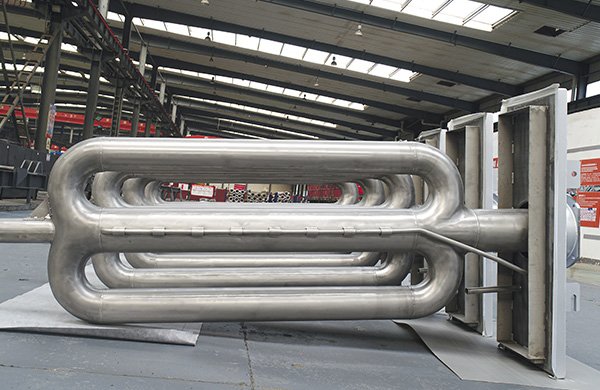
The 3mm thick alloy sheet metal body, fabricated by Qingdao NPA using coil welding technology, replaces traditional cast radiant tubes. It not only delivers high thermal efficiency, stable thermal load, and excellent performance, but also significantly reduces weight, making installation and replacement on site much easier.    

Thin-wall radiant tubes can be widely adapted to various equipment, such as vertical CGL, horizontal CGL, and CAGL. They have already been adopted in many large domestic steel enterprises and heat treatment plants for automotive components.    

Product Type    

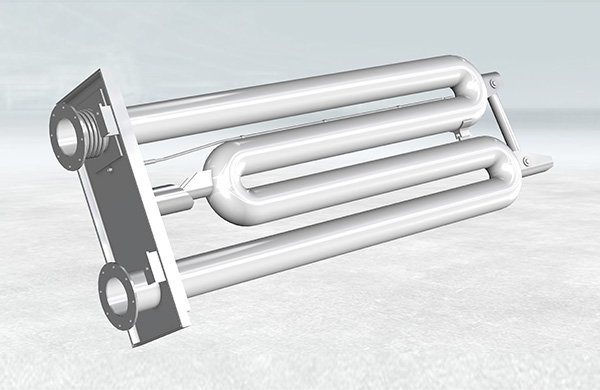
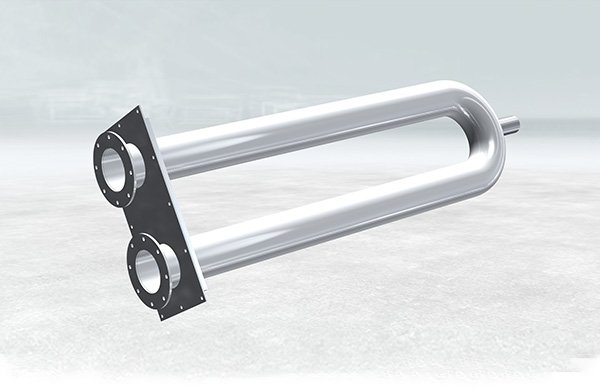
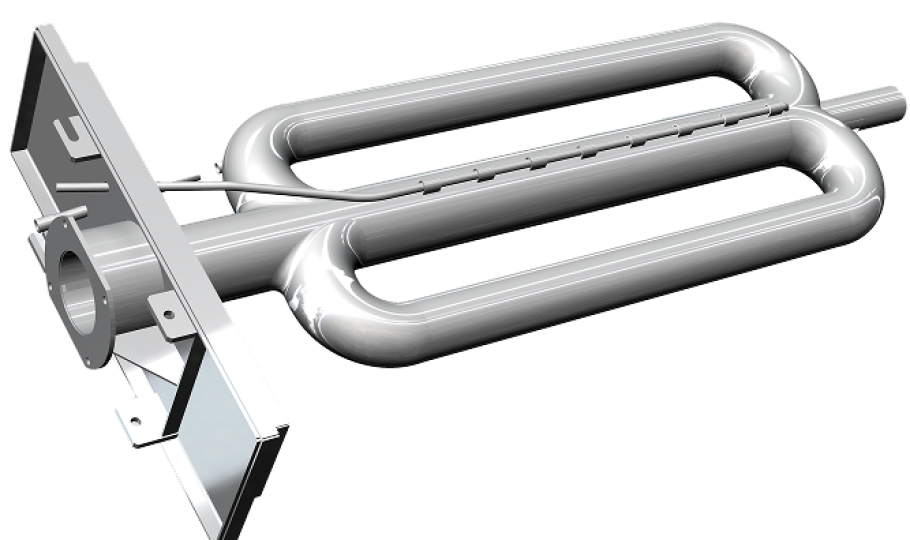
Thin-wall Type, Convex Thin-wall Type( all including W type, U type, single P type, double P type)    
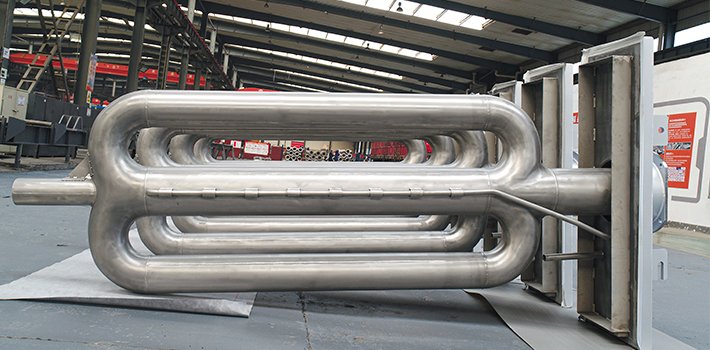
-5

Basic Performance

Basic Performance of Thin-Wall Radiant Tubes

Room Temperature and Short-Term Performance

Room Temperature and Short-Term Performance of Inconel601 alloy

Performance TypeTest ConditionsSpecification Requirements
Tensile StrengthRoom Temperature≥650MPa
Yield StrengthRoom Temperature≥300MPa
ElongationRoom Temperature≥30%
Tensile Strength600℃≥400MPa


Stress-Rupture Properties

Inconel601Alloy creep performance

Comparison ItemsTest Conditionsinconel 601Cr25Ni35
Creep Strength800℃/1000h65MPa 0.1% Deformation48MPa 0.1% Deformation
Time to Fracture800C/50MPa≥6000h≥3500h
Creep Strength900C/1000h35MPa 0.1% Deformation22MPa 0.1% Deformation
Time to Fracture900C/30MPa≥2500h≥1200h


Thermal Resistance Performance

Thermal Resistance

Comparison ItemsInconel601
(3mm panel)
Cr25Ni35
(10mm tube)
Conclusion (Actual Heat Transfer Performance)
Material Thermal Conductivity λ (800°C)18.9W/(m·K)21.5W/(m·K)Cr25Ni35 material is superior.
Thickness d0.003m(3mm)0.01m(10mm)The thickness of Cr25Ni35 is 3.3 times that of the former
Thermal Resistance  R(800℃) 0.003÷18.9≈
0.000159m2.K/W
0.01÷21.5≈
0.000465m2.K/W
The thermal resistance of Cr25Ni35 is 2.9 times that of the former.
Actual Heat Transfer RateFaster (Low thermal resistance, heat easily passes through the sheet)Slower (High thermal resistance, heat has difficulty passing through the thick-walled tube)Inconel 601 sheet offers more efficient actual heat transfer.

A lower thermal resistance indicates faster heat transfer performance. This data shows that the thermal conductivity of a 3mm Inconel 601 product is far superior to that of a 10mm Cr25Ni35.

Thermal Deformation Rate

Thermal Deformation Rate Comparison (Based on Coefficient of Thermal Expansion - CTE)    

The thermal deformation rate is determined by the coefficient of thermal expansion (CTE) multiplied by the temperature change. It is an inherent property of the material, independent of thickness or form (sheet/pipe), and increases only with rising temperature. Data are based on the ASTM E228 standard (quartz dilatometer method).    


Key Coefficient of Thermal Expansion Parameters (Unit: 10⁻⁶/℃)    

Temperature Range ()Inconel 601 (CTE)Cr25Ni35(CTE)Difference Analysis (Trends in Thermal Deformation)
20-20012.813.5Thermal deformation rate is 5.5% higher
20-40013.914.6Thermal deformation rate is 5.0% higher
20-60014.815.5Thermal deformation rate is 4.7% higher
20-80015.616.2Thermal deformation rate is 3.8% higher
20-100016.316.8Thermal deformation rate is 3.1% higher


Rapid Response, Energy Saving and Consumption Reduction Rapid Response, Energy Saving and Consumption Reduction
Easy Installation, Hassle-free Maintenance Easy Installation, Hassle-free Maintenance
Crack Resistance and Durability, Extended Service Lif Crack Resistance and Durability, Extended Service Lif
High Cost Performance and Stable Supply High Cost Performance and Stable Supply

Type Comparison

Comparison of Thin-Walled Radiant Tubes vs. Traditional Thick-Walled Radiant Tubes

Production efficiency improvement: Due to faster heating and fewer failures, the daily average capacity of heat treatment production lines increases by 8%-12%.    

Overall cost reduction: Combined savings on energy consumption, maintenance, and replacement costs amount to 200,000 to 500,000 yuan per production line per year.    

Better product quality: Improved temperature control accuracy (±5°C) leads to significantly better coating uniformity and mechanical property stability of workpieces after heat treatment.    

Type of advantagesKey AdvantagesKey Differences Compared with Thick-Walled Radiant Tubes
Thermal Efficiency and Energy SavingShort heat transfer path, fast thermal response, and high-temperature oxidation resistance.Thermal conductivity efficiency increased by over 30%, heating and cooling rates accelerated by 40%, annual energy consumption reduced by 10%-15%.
Lightweight and Maintenance ConvenienceLightweight, modular design; installation requires no heavy equipment.Weight reduction of over 60% per unit, installation time shortened to 4-6 hours (compared to 1-2 days for thick-walled tubes), and maintenance costs reduced by 50%.
Structural Stability and Service LifeNo casting defects, distributed thermal stress, resistant to high-temperature corrosion.Despite its lightweight design, the service life remains uncompromised, reaching 3-5 years, as demonstrated by practical application at Baosteel, where stable operation has been achieved for over five years.
Localization and Cost PerformanceDomestically produced Inconel 601 sheets as a substitute for imported equivalents, with comparable performance.Raw material cost reduced by 20%-25%, product selling price lowered by 15%, and order lead time ≤15 days.


Typical products

部分产品

In-depth understanding

+86-0532-87314976

npamarket@npa-china.com

+86-0532-87314976

售后服务

npamarket@npa-china.com

+